전북대학교
전북대학교
RESEARCH
Our lab studies LRG1 (Leucine-rich α-2-glycoprotein 1), a multifunctional protein involved in various physiological and pathological processes.
We investigate how LRG1 contributes to:
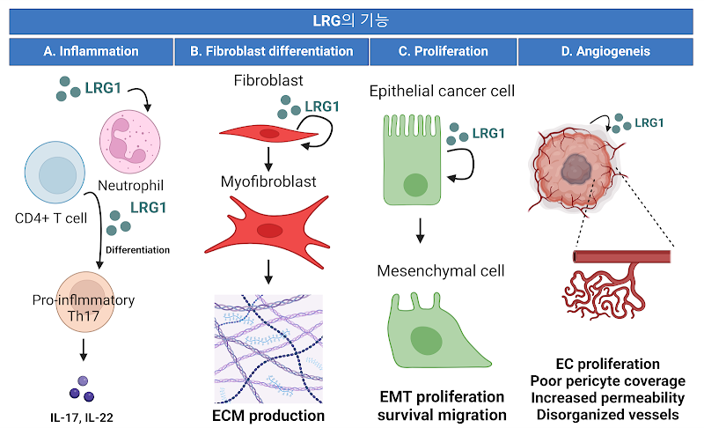
- Cancer progression through modulation of inflammation, EMT, and angiogenesis
- Metabolic disease via regulation of adipose tissue inflammation and remodeling
- Fibrosis by promoting fibroblast-to-myofibroblast differentiation and ECM production
In particular, we focus on LRG1’s role in inflammatory signaling and fibrotic pathways in the tumor microenvironment and metabolic tissues, aiming to uncover novel therapeutic targets for cancer and metabolic disorders.
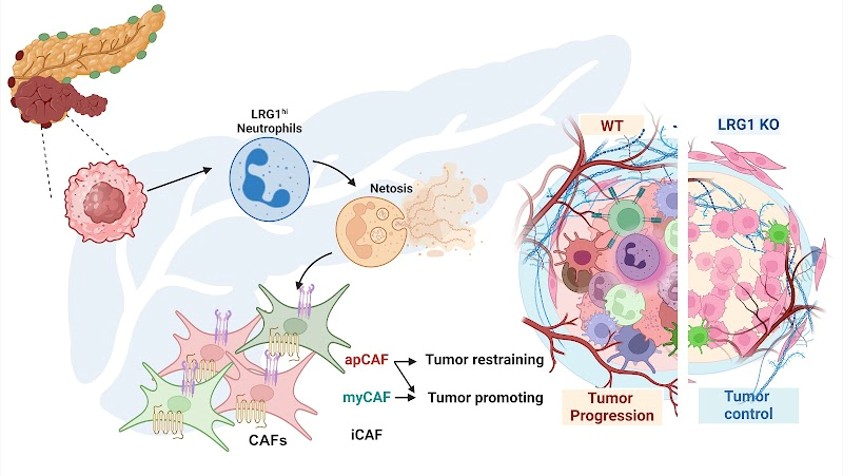
•LRG1– adhesion GPCR Signaling in Pancreatic Cancer Fibrosis
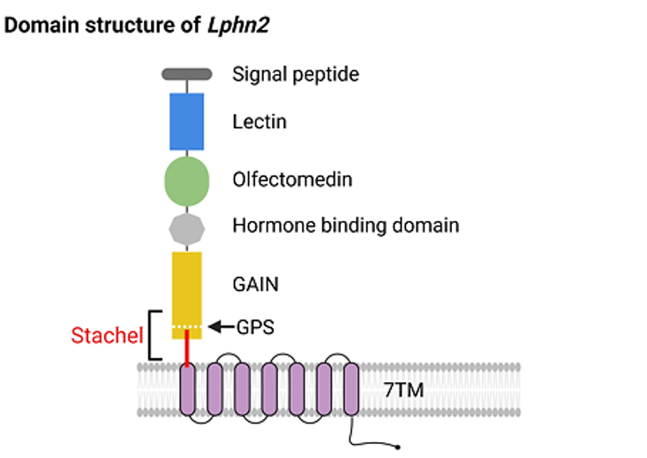
We investigate a TGF-β-independent mechanism of pancreatic stellate cell (PSC) activation mediated by Leucine-rich α-2-glycoprotein 1 (LRG1) interacting with the adhesion GPCR. Our goal is to define the fibrogenic role of the LRG1–LPHN2 axis in the pancreatic tumor microenvironment and to develop therapeutic strategies that disrupt this signaling to reduce fibrosis and improve treatment outcomes.
Exploring alternative splicing of GPCR transcripts, focusing on LPHN2 variants specifically expressed in pathological fibrosis conditions. Identifying exon skipping events and regulatory splicing motifs, and developing antisense oligonucleotide (ASO)-based therapeutic interventions to restore normal GPCR splicing patterns.
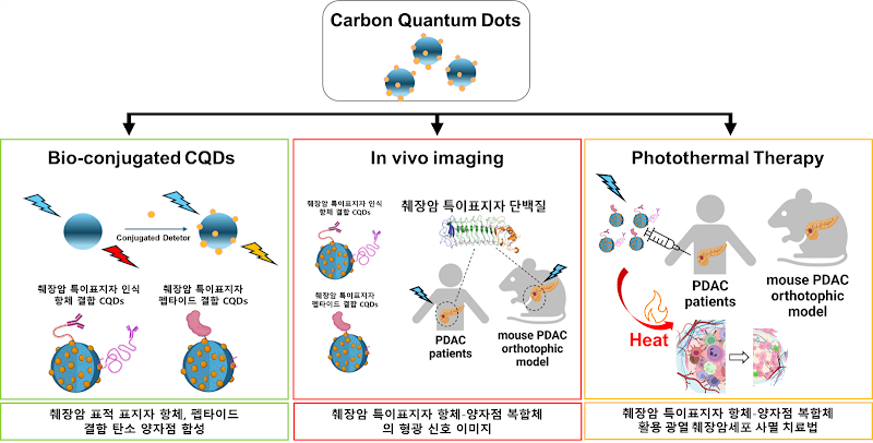
We develop quantum dot-based nanomedical platforms conjugated with pancreatic cancer-specific antibodies and peptides.
These complexes enable:
- In vivo optical imaging: Precise visualization of pancreatic tumors through specific targeting.
- Photothermal therapy: Effective ablation of pancreatic cancer cells by converting near-infrared light into therapeutic heat.
Our research aims to advance personalized cancer diagnostics and treatment using state-of-the-art nanotechnologies.